
Blog
Research hyperlinks consumption of extremely processed meals to poorer thigh muscle high quality
Apr
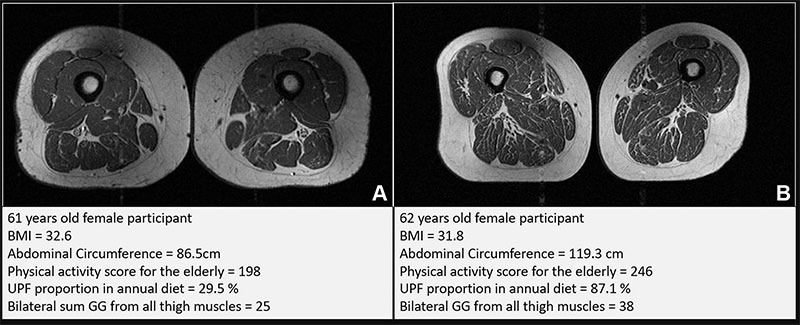
A research not too long ago printed within the journal radiology linked to the consumption of extremely processed meals (UPF) to better fatty infiltration within the thigh muscle tissues on magnetic resonance imaging (MRI), an indicator of poorer muscle high quality in individuals at danger for knee osteoarthritis.
Evaluation of MRI Knowledge from 615 contributors confirmed that increased UPF Ingestion was related to better fatty infiltration into the thigh muscle tissues, even after accounting for physique mass index (BMI), with stronger associations after accounting for waist circumference (Alternating present).
These outcomes counsel that eating regimen high quality and beefy distribution could also be associated to poorer thigh muscle composition no matter gender, significantly in getting older populations liable to useful decline.
UPFs, an indicator of contemporary Western diets, are a serious contributor to rising weight problems charges. These merchandise, excessive in salt, sugar, beefy and components, typically crowd out nutrient-dense meals, leading to poorer eating regimen high quality and insufficient consumption of proteins and key micronutrients important for muscle well being.
Weight problems is a serious danger issue for knee osteoarthritis (ALSO), a disabling situation that impacts a number of joint tissues, together with muscle and beefy.
Current findings level increased UPF Ingestion results in poorer knee outcomes, diminished bodily efficiency, decrease muscle mass and increased physique beefy; Nevertheless, its results on skeletal muscle integrity stay poorly understood, significantly in these at danger ALSO.
UPF and knee osteoarthritis MRI research design
In the current research, researchers examined the connection between UPF Uptake and infiltration of thigh muscle beefy (MFI) below the Osteoarthritis Initiative 2004–2015 (OAI) research contributors.
These individuals had been liable to it ALSO Nevertheless, they didn’t beget radiographic osteoarthritis (grade 1 or decrease on the Kellgren-Lawrence scale) and reported no joint ache, stiffness, or severe comorbidities (inflammatory arthritis, diabetes, stroke, or most cancers).
The staff assessed dietary consumption utilizing validated meals frequency questionnaires (FFQs), together with the Block Temporary 2000 FFQinformation meals consumption in comparison with the earlier yr. They labeled meals utilizing the NOVA system for estimation UPF Recording.
To evaluate muscle high quality, the researchers carried out an axial evaluation MRI slices. You graded MFI utilizing the Goutallier classification. Grades ranged from 0 (circumstances with out fatty infiltration) to 4 (circumstances with over 50% fatty infiltration). Two skilled readers independently assessed 10 bilateral hamstrings and created sum scores for flexors, extensors, adductors, and whole thigh MFI.
The researchers used two regression fashions, considered one of which was adjusted BMI and the opposite for Alternating present. Each fashions had been moreover adjusted for age, race, ethnicity, training, revenue, bodily exercise, whole power consumption, melancholy, and smoking standing.
As well as, the staff performed sex-stratified and sensitivity analyzes by adjusting for whole dietary beefy and evaluating contributors with out X-rays ALSO (Grade 0) to these with doubts ALSO (Class 1). To make sure reliability, each readers reassessed a subset of 100 contributors six weeks later to evaluate reproducibility.
Increased UPF absorption and muscle high quality outcomes
The research inhabitants consisted predominantly of girls (n=340) of older age (imply age 60 years) and of non-Hispanic ethnicity (98%). Most of them had been obese, with common weight BMI of 27, and over half of stated they’d not smoked up to now. Belly weight problems was frequent, affecting 43% of males and 81% of girls (imply). Alternating present99cm). The imply power consumption was 1,381 kcal/day, with UPFIt accounts for about 41% of each day consumption.
Increased after adjusting for physique mass index UPF Ingestion was considerably related to a bigger thigh dimension MFI in all thigh muscle tissues as properly as within the bilateral flexors and adductors. These associations had been stronger in fashions adjusted for waist circumference than in fashions adjusted for waist circumference BMI.
The outcomes counsel that central beefy distribution might support justify this relationship UPF Ingestion may be related to the buildup of muscle beefy.
Taken collectively, these help a hyperlink between poorer eating regimen high quality and extra intramuscular beefy on this at-risk inhabitants, though the research did circuitously take a look at the underlying mechanisms.
The connection between UPF consumption and MFI was linear and constant throughout genders. Among the many muscle teams, the flexor muscle tissues confirmed the very best values MFIExtensors confirmed the bottom and adductors confirmed the strongest affiliation with UPF Recording. Reproducibility analyzes confirmed great inter- and intra-observer settlement for Goutallier grading.
Sensitivity analyzes confirmed the robustness of the outcomes, with outcomes remaining unchanged after adjusting for whole dietary beefy and stronger associations occurring in these with doubts ALSO than in these with out radiological illness. Nevertheless, since it is a cross-sectional research, the outcomes execute not show a causal relationship.
Results on the standard of vitamin and musculoskeletal well being
The research finds that extremely processed meals consumption is related to poorer muscle high quality, mirrored in better fatty infiltration within the thigh muscle tissues in people liable to knee osteoarthritis, no matter gender.
Stronger associations in fashions with adjusted waist circumference spotlight the attainable mixed affect of eating regimen high quality and beefy distribution on musculoskeletal well being.
The outcomes help additional analysis into whether or not dietary habits can affect muscle high quality and useful decline with age. Future longitudinal research shall be wanted to make clear causal relationships and decide whether or not dietary interventions can mitigate and behind muscle loss ALSO Development.
