
Blog
Unique technique promotes AI-driven protein engineering with in depth information
Apr
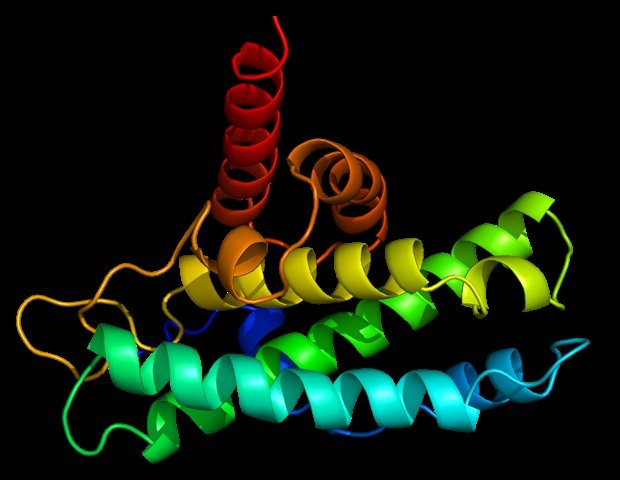
Protein engineering is an space that’s predestined for analysis in the sphere of synthetic intelligence. Each protein is made up of amino acids; To optimize a protein’s operate, researchers modify proteins by changing one in every of 20 totally different amino acids with one other. For a protein simply 50 amino acids lengthy, this results in about 1.13 x 1065 potential combos to check – that is 113 adopted by 65 zeros, or 5 occasions as many zeros as a trillion.
This variety of potential combos, which can’t be examined within the laboratory, makes protein engineering an supreme problem for AI. Modeling which of those combos produces the most effective outcomes is an ideal drawback given the large computing energy of the expertise. However AI is just as safe as the info used to practice it, and in some areas of protein engineering there merely wasn’t the suitable information.
One in all the largest bottlenecks in AI-driven protein engineering is the incapacity to develop machine studying fashions. It generates the proper and ample experimental information to practice them. When growing protein exercise, which optimizes how a protein works, we had a really clear drawback: there have been merely not sufficient information units to practice correct fashions.”
Han Xiao, professor of chemistry, organic sciences and bioengineering at Rice College and director of the SynthX Heart
So as to generate AI fashions that may precisely predict methods to optimize a protein’s operate or exercise, Xiao’s staff first needed to generate sufficient exercise information on a selected protein to practice an AI mannequin. In a current paper, Xiao’s staff and collaborators from Johns Hopkins College and Microsoft did simply that, presenting an method that offered the info wanted and constructed correct fashions in only three days.
This method, known as sequence show, can generate greater than 10 million information factors in a single experiment. These information factors are then fed into protein language AI fashions, which exhaust them to foretell which adjustments to a protein’s amino acids will produce the specified change to the protein’s exercise or operate.
“We had been in a position to develop an activity-based barcoding system that information the exercise of particular person protein variants and generates the style of information set wanted to practice a machine studying mannequin,” stated Linqi Cheng, a Rice graduate scholar and first writer of the research. “The mannequin was then in a position to predict mutations that considerably improved the exercise of the protein we had been learning.”
As a proof of idea, the staff selected a small CRISPR-Cas protein. This protein was valued for its measurement, however its exercise was restricted to focused DNA sections. The researchers wished to establish a model that might slice a greater diversity of DNA targets.
First, they mutated the DNA that encodes the Cas9 protein, creating many variations. Every variant was accompanied by a clean DNA barcode, together with a particular editor that modified the barcode in response to the protein’s exercise stage. Because the exercise of the protein elevated, the exercise of the editor additionally elevated. This meant that essentially the most lively protein variants had the most important adjustments of their barcodes. The DNA barcodes had been then learn by next-generation sequencing, which basically scanned the barcode and categorized every sequence by stage of exercise.
“AI would not change experiment right here. As a substitute, it is the experiment that issues,” Cheng stated. “Sequence Show offers us the info basis and the fashions back us search a a lot bigger information area for robust candidates.”
The staff efficiently repeated this course of with different proteins, together with aminoacyl-tRNA synthetases, cytosine deaminase and uracil glycosylase inhibitor. In every case, the barcode experiment generated sufficient information factors to practice AI fashions.
“This method gives a sensible framework for integrating AI and protein engineering,” stated Xiao, who can also be a Most cancers Prevention and Analysis Institute fellow. “As a substitute of counting on machine studying as a standalone answer, we couple it with an experimental platform that generates high-quality coaching information. This synergy permits extra environment friendly discovery of superior analysis instruments and next-generation therapeutic proteins.”
This work was supported by a SynthX Seed Award (SYN-IN-2024-002), the Nationwide Institutes of Well being (R35-GM133706, R01-CA277838, R01-AI165079 to HX), the Robert A. Welch Basis (C-1970 to HX), the US Division of Protection (W81XWH-21-1-0789, HT9425-23-1-0494, HT9425-25-1-0021 to HX), a 2024 Rice Artificial Biology Institute Seed Grant (HX), and a Medical Analysis Award from the Robert J. Kleberg, Jr. and Helen C. Kleberg Basis.
Supply:
Journal reference:
Cheng, L., (2026). Sequence Show permits large-scale sequence exercise information units for speedy protein engineering. . DOI: 10.1038/s41587-026-03087-3. https://www.nature.com/articles/s41587-026-03087-3
